
View Menu


Date: 22/09/2026
We are delighted to announce that Dr Rebecca Mawson from the University of Sheffield has joined Devices for Dignity, The NIHR’s HealthTech Research Centre in Long-term Conditions, as our new Women’s Health Theme Co-Lead. A lecturer at the University of Sheffield’s School of Medicine and Public Health, NIHR Clinical Lecturer in Primary Care and active GP, Rebecca will add valuable expertise in her specialist areas which include sexual and reproductive health in primary care, digital health and inclusive health research. Working alongside Rebecca on some of her recent projects we have witnessed her passion for women’s health and drive for inclusive research first-hand and we are so excited to continue making a difference together.
I trained in medicine at Leeds, then did my foundation years in Leeds and Dewsbury. A formative stretch for me was 18 months working in obstetrics and gynaecology in Christchurch, New Zealand, which gave me an early, intensive grounding in women's reproductive health before I even started GP training. I qualified as a GP in Harrogate in 2014 and came back to Sheffield, where I'd grown up.
What really shaped the direction of my career was going back into academia in 2016 and starting to see, systematically, the patterns I'd only sensed anecdotally in clinic: that women (particularly from under-represented and deprived communities) were hitting the same barriers again and again in accessing sexual and reproductive healthcare. My MD, completed in 2022, focused specifically on inequalities in sexual and reproductive health in general practice, and that's really where my research identity as someone working at the intersection of clinical practice, health inequalities, and innovation solidified. Since becoming an NIHR Clinical Lecturer in 2023, that's broadened out into contraception access, menopause care, HIV management in primary care, and increasingly endometriosis and PCOS.
I still work clinically as a GP alongside the research, which matters to me: it keeps the questions I'm asking academically grounded in what's actually happening for patients in the room.
What I keep coming back to is the gap between how common these conditions are and how poorly served women are by the systems meant to help them and how unevenly that gap is distributed. Endometriosis is the condition that crystallises this for me most sharply: it affects around one in ten women, yet the average time from first symptoms to diagnosis in the UK is still 8–9 years, a figure that has barely shifted despite years of guidance and awareness campaigns. That's not a knowledge problem alone; it's structural, it's cultural, and it's about whose pain gets believed and investigated early.
I'm interested in why the delay persists even where GPs know the guidance, including the genuine clinical uncertainty clinicians describe: an endometriosis diagnosis doesn't always change management, requires an invasive test (laparoscopy) to confirm, and doesn't reliably predict prognosis. Understanding that complexity, rather than assuming delay is simply about awareness, is what I think will actually move the pathway forward.
Alongside that, I'm leading The Hormone Effect (THE), funded by the South Yorkshire Digital Health Hub, which uses digital tracking to better understand the effects of hormonal contraception — work that speaks directly to how women and clinicians currently manage symptoms like heavy bleeding and pain, often before (or instead of) a formal diagnosis, and where better data could improve how those hormonal treatments are selected and monitored. And my community-led research with women from ethnic minority backgrounds on their experiences of contraception services adds the equity lens that runs through everything I do.
The diagnostic delay for endometriosis remains the starkest example (8–9 years on average and a condition as prevalent as type 2 diabetes), a figure that hasn't meaningfully improved despite policy attention. Part of that is genuinely technical: there's still no acceptable, objective, non-invasive test that can identify endometriosis or predict its severity, so diagnosis usually still depends on laparoscopy, which is invasive and rationed by waiting lists. Part of it is what my own research area explores — the real clinical uncertainty GPs hold, since a diagnosis doesn't always change what treatment is offered, and empirical treatment (like hormonal options) sometimes relieves symptoms without ever confirming what's causing them.
On the treatment side, options for endometriosis, adenomyosis, and heavy menstrual bleeding remain limited, and there's a heavy reliance on hormonal contraception as a first-line, catch-all management strategy — useful, but often applied without much personalisation or good data on how an individual is actually responding, which is part of what motivates my digital tracking work.
Underneath both the diagnostic and treatment gaps sits a research and training gap: these conditions are under-researched relative to how common and disabling they are, and many clinicians graduate without enough grounding to recognise them confidently which contributes to normalisation (“it's just a heavy period”) rather than timely referral.
And layered on top of all of this is inequity of access. My own work with ethnic minority women accessing contraception services, and my MD research on deprived communities' access to sexual and reproductive healthcare, both point the same way: additional, compounding barriers — trust, language, services not designed around real circumstances — mean the women already facing the most disadvantage elsewhere in their lives tend to wait longest and get least.
I see innovation as most powerful when it's aimed squarely at the diagnostic delay and the access gap, rather than innovation for its own sake. That's the ambition behind the accelerated diagnostic pathways I'm developing for pelvic pain and heavy menstrual bleeding, combining better recognition in primary care with clearer routes through to specialist input, so women aren't stuck waiting years for a name for what's happening to them.
Digital tools have real potential here too. The tracking approach we're using in The Hormone Effect can surface patterns in how someone is responding to a hormonal treatment that are hard for either patient or clinician to reconstruct from memory alone — which could support more personalised prescribing rather than a one-size-fits-all approach to hormonal management. And AI-assisted diagnostic approaches — like the machine-learning work happening in Denmark through the FEMaLe project — point to what might eventually be possible for earlier, less invasive endometriosis detection, if it can be safely adapted into UK primary care.
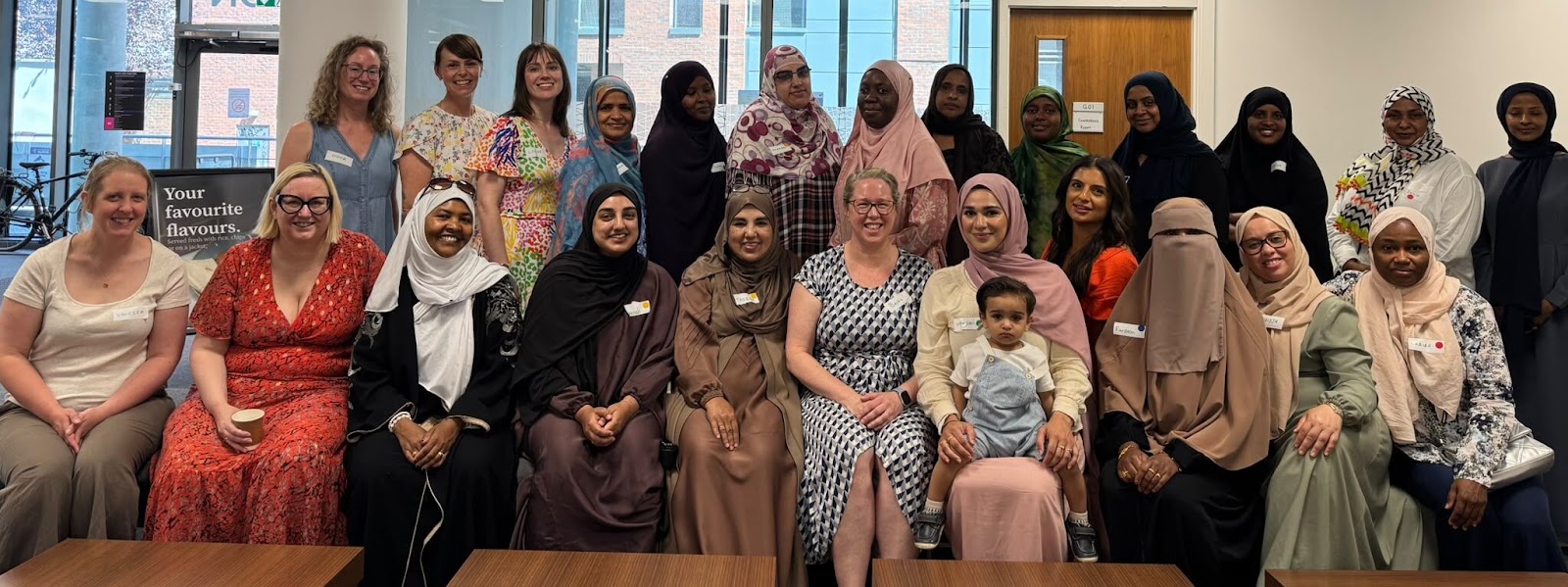
But the innovation that matters most to me isn't only technological — it's methodological. Co-design and community-led research are innovations in their own right: they change who gets to define the problem and shape the solution, which is exactly what's needed when the people most affected by inequality have historically been least consulted about what would actually help them.
My own research into GPs' diagnostic reasoning around pelvic pain and heavy menstrual bleeding — and wider qualitative literature on this, including work exploring the genuine clinical ambivalence clinicians feel toward an endometriosis diagnosis and reshaped how I think about the delay itself. It's tempting to treat diagnostic delay as purely an awareness or training problem, but that research shows GPs are often navigating real uncertainty: whether a diagnosis will change treatment, whether it's worth the risk and wait for laparoscopy when hormonal treatment might relieve symptoms anyway. That's pushed me toward pathway solutions that acknowledge this complexity rather than assuming better education alone will fix it.
The community-led research approach has probably shifted my thinking the most on the access side. Working with community researchers to facilitate focus groups with ethnic minority women about contraception, rather than researchers going in cold, showed me how much gets missed when research is designed without that kind of trusted access built in from the start.
International collaborations are important too. Seeing how SPHERE in Melbourne approaches endometriosis management through co-design with consumers via their Endo-MP programme, and how Aarhus is using large-scale machine learning for endometriosis diagnosis through FEMaLe, has been useful in showing me what's genuinely being tried elsewhere — and what of that might translate into UK general practice.
I'd like to see the years-long diagnostic delay for conditions like endometriosis become the exception rather than the norm, women getting a name for what's happening to them, and a treatment plan tailored to how they're actually responding to it, in months rather than years. I'd like hormonal treatment for conditions like heavy menstrual bleeding to be genuinely personalised rather than trial-and-error. And I'd like the progress this drives to reach everyone equally, particularly the women from deprived and ethnic minority communities who currently wait longest and are heard least. Innovation needs to focus on finding solutions to problems affecting all of our population and in order to do that we need to understand where the most need is.